
Derek H.'s Risky Journey: A Counterfeit Cash Experience
A Denver man thought he could turn counterfeit $100 dollar bill purchases into legitimate bank funds through ATM deposits. His plan collapsed within days.
- Date
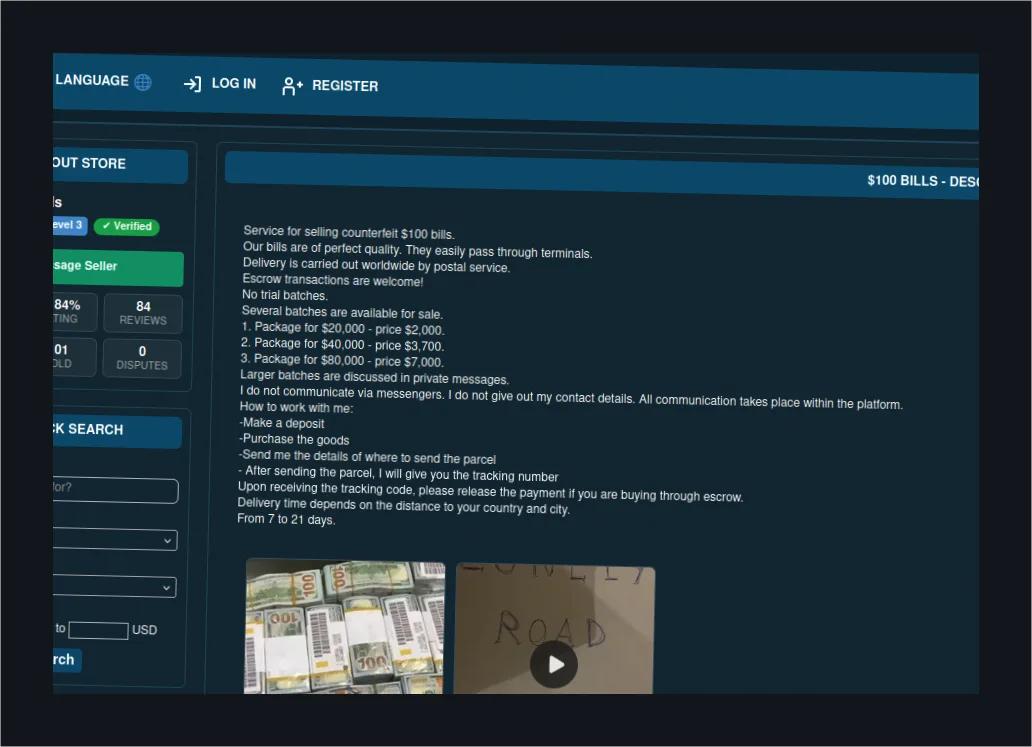
Derek H. lived in Denver and believed he had discovered a foolproof method to profit from fake money darknet transactions. He spent $1,200 in cryptocurrency during January 2025 to acquire forty counterfeit $20 dollar bills and larger denominations from an underground vendor. The seller advertised these as premium forgeries with functional security features like UV protection and watermarks. Derek's strategy involved feeding the bills into ATMs that accept cash deposits. These machines scan currency and add the amount to your account balance digitally. He assumed that once the fake money dollar bills became digital entries, he could withdraw or transfer them as legitimate funds. The first two machines he tested processed $800 without incident. Problems emerged at the third location when a bill was rejected. The fourth ATM accepted his deposit but marked it for manual inspection. By morning his bank had frozen access to his account. Within three weeks the U.S. Secret Service arrested him.
Key takeaways
- ATMs use multiple sensors that detect counterfeit bills beyond visual inspection
- Banks flag unusual deposit patterns and manually review suspicious transactions
- Low-priced counterfeit currency from darknet markets lacks necessary technical features
- Cryptocurrency payments create traceable records linking buyers to illegal purchases
- U.S. Secret Service monitors darknet marketplaces and prosecutes currency fraud aggressively
The Mechanics of ATM Fraud
Modern cash-accepting ATMs operate differently than people imagine. They scan every bill for multiple security markers simultaneously. Magnetic ink patterns must align with Treasury specifications. Infrared sensors detect paper composition unique to genuine currency. UV light reveals embedded security threads invisible to human eyes. Derek assumed the fake 100 dollar note quality would fool these sensors because they looked convincing to him. His vendor promised "superdollar" craftsmanship with working magnetic strips. The website where the purchase was made displayed samples of realistic fake money australia styles alongside American denominations. This fake money site emphasized visual accuracy over technical precision. The first two ATMs likely used older scanning technology or had degraded sensors. Newer machines at the third and fourth locations performed deeper analysis. Banks don't rely solely on ATM scans for verification. Every deposit over certain thresholds triggers backend review by fraud detection systems. These algorithms compare deposit patterns against account history and flag anomalies. Derek's sudden cash deposits after months of electronic-only transactions raised immediate suspicion. The pending review status at the fourth ATM indicated human staff would physically examine those bills. Once bank employees handled the notes they recognized telltale signs of counterfeiting. Paper texture felt wrong and security features failed manual inspection.
Why the Scheme Failed
Derek made several critical mistakes beyond choosing poor-quality prop money dollars. He deposited large amounts rapidly at multiple locations within hours. This behavior pattern matches known fraud tactics that banks monitor actively. Genuine customers rarely deposit thousands in cash at ATMs sequentially. He used his personal account rather than opening disposable accounts. This linked all fraudulent activity directly to his identity and address. The fake dollar price he paid reflected low-grade counterfeits despite vendor claims. Authentic-looking forgeries cost significantly more than $30 per bill on darknet markets. Professional counterfeiters charge hundreds per note for pieces that might pass bank scrutiny. Derek's budget purchase of buy fake dollars guaranteed detection during manual review. The 2009 series bills he bought lacked current security features added in later redesigns. Banks train staff to recognize outdated series being deposited in suspiciously new condition. His cryptocurrency payment created a permanent blockchain record connecting him to the transaction. Law enforcement traced his wallet address back through exchange records to his verified identity. The U.S. Secret Service specializes in currency crimes and monitors darknet marketplaces continuously. They likely identified the vendor's operation before Derek made his purchase. His arrest followed standard investigative protocols for counterfeit $20 dollar bills and higher denominations. Searching for prop money for sale nearby or buy counterfeit 20 dollar bills online leaves digital footprints investigators follow easily.
Lessons from Failure
Derek's case illustrates why ATM deposit schemes fail consistently despite seeming plausible. Banks employ layered verification systems that extend far beyond initial machine scans. Human review catches what automated sensors miss. Law enforcement monitors darknet markets where these fake money dollar bills circulate. Cryptocurrency payments provide investigators with traceable evidence rather than anonymity. The gap between visual quality and technical authenticity dooms most counterfeit operations. What appears convincing to casual observation fails under forensic examination. Derek now faces federal charges carrying potential decades in prison. His $1,200 investment cost him his freedom and financial future.
 Darknet Market Tutorial for New UsersLearn how to safely access and use darknet markets with this step-by-step tutorial designed for complete beginners.
 Accessing WeTheNorth MarketLearn how to access WeTheNorth market safely with step-by-step instructions and essential safety tips for navigating the darknet.
 Exploring the Onion MarketplaceDiscover the Onion marketplace for secure transactions, product listings, and tips for safe browsing on the dark web.