
Exploring Lists of Dark Web Markets
This guide is for researchers and potential users seeking insights into active dark web marketplaces.
- Date
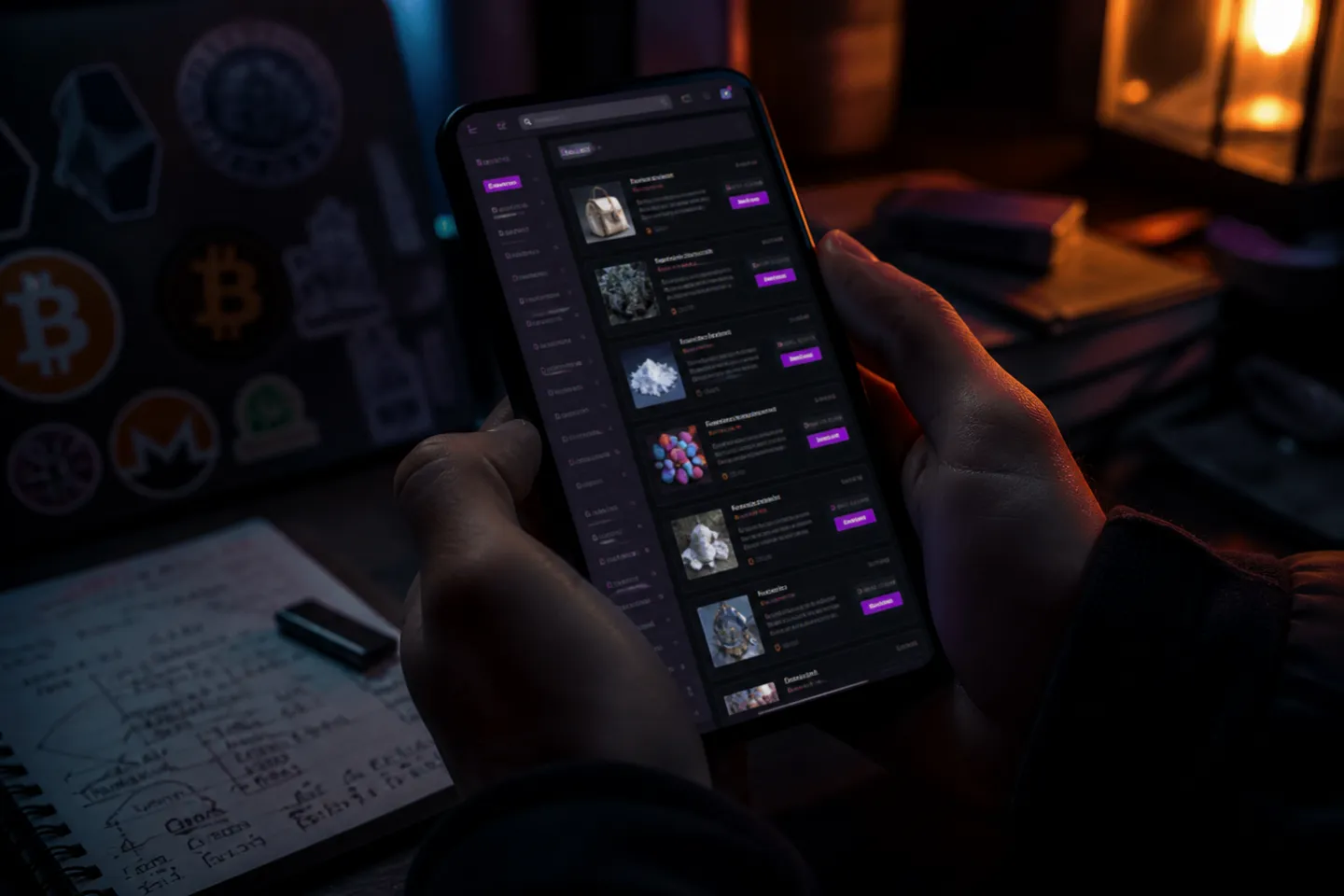
Dark web markets lists catalog anonymous marketplaces accessible through Tor where users trade goods and services using cryptocurrency. As of mid-2025, law enforcement operations dismantled major platforms including Archetyp Market with 600,000 users1 and Incognito Market with over $100 million in transactions1, while darknet markets collectively received just over $2 billion in Bitcoin during 20242. Active lists change frequently due to exit scams and takedowns, with 42% fewer new marketplaces launched in 2024 compared to the previous year3.
What Are Dark Web Markets and How Do They Work?
Dark web markets are online platforms that operate on the Tor network, allowing users to buy and sell goods and services anonymously. These marketplaces primarily use cryptocurrency for transactions, which enhances privacy and security. The Tor network consists of volunteer-run servers that relay and encrypt internet traffic, making it difficult to trace users’ activities4.
A key feature of these markets is the escrow system. When a buyer purchases an item, the payment is held in escrow until the buyer confirms receipt of the product. This system protects both buyers and sellers from fraud. If the buyer does not receive the item, they can file a dispute, and the funds will be returned1. Additionally, many markets implement vendor rating mechanisms. These ratings help users assess the reliability of sellers based on previous transactions, reducing the risk of scams or low-quality products.
It's important to distinguish between the dark web, deep web, and surface web. The surface web is what most people use daily, consisting of indexed websites. The deep web includes unindexed content, such as private databases or email accounts. The dark web is a small part of the deep web, accessible only through specific software like Tor and often associated with illicit activities.
Dark web markets continue to evolve, with significant revenues reported. In 2024, they collectively received just over $2 billion in Bitcoin2. However, law enforcement efforts have led to the shutdown of major platforms, highlighting the risks and volatility in this space.
Active Dark Web Markets in 2026: Complete List
Several darknet markets remain operational in 2026, each specializing in different types of goods and services. Below is a list of notable markets currently active, along with their launch dates and specializations.
Russian Market
- Launch Date: 2014
- Specialization: Primarily drugs and counterfeit goods. Known for its extensive Russian-speaking user base.
Torzon
- Launch Date: 2023
- Specialization: Fraud services and stolen credentials. Gained attention for its user-friendly interface.
STYX
- Launch Date: 2025
- Specialization: Drugs and hacking services. Features a robust rating system for vendors.
Brian's Club
- Launch Date: 2023
- Specialization: Stolen credit card information and financial fraud. Notable for its active community.
BidenCash
- Launch Date: 2022
- Specialization: Fraudulent financial services and stolen data. Continues to attract users seeking easy access to financial scams.
WeTheNorth
- Launch Date: 2024
- Specialization: Drugs and counterfeit goods. A growing market with a focus on North American users.
Exodus
- Launch Date: 2025
- Specialization: Digital goods, including software and hacking tools. Known for its anonymity features.
Vortex
- Launch Date: 2024
- Specialization: Drugs and illegal digital content. Offers a diverse range of products.
Abacus
- Launch Date: 2023
- Specialization: Fraud and identity theft services. Gained traction following the closure of other similar platforms.
Hansa Market
- Launch Date: 2017 (reopened in 2026)
- Specialization: A mix of drugs and digital products. Known for its focus on user security and vendor ratings.
Incognito Market
- Launch Date: 2021 (dismantled in 2025 but noted for its significance)
- Specialization: Drugs and other illegal goods. Processed over $100 million before its closure1.
Nemesis Market
- Launch Date: 2023 (dismantled in 2024)
- Specialization: Fentanyl and money laundering services. Operated under significant scrutiny before being shut down5.
AlphaBay
- Launch Date: 2014 (originally closed in 2017, resurfaced in 2026)
- Specialization: A wide range of illicit goods including drugs and hacking services. Its return has attracted attention in the dark web community.
Silk Road 3.0
- Launch Date: 2026
- Specialization: Drugs and various illegal items. A continuation of the original Silk Road's legacy.
Elysium Market
- Launch Date: 2025
- Specialization: Drugs and hacking tools. A newer entrant in the market space.
The landscape of dark web markets is constantly changing due to law enforcement actions and user preferences. Users should exercise caution and conduct thorough research when engaging with any marketplace.
Market Specializations: What Each Platform Offers
Dark web markets specialize in various product categories, catering to specific user needs. Understanding these specializations can help you navigate the landscape more effectively.
Credential Marketplaces
Credential marketplaces focus on selling stolen data, such as login credentials and payment information. For example, Brian's Club specializes in stolen credit card information. It has gained popularity due to its active community and extensive listings. Torzon is another notable platform, known for its user-friendly interface and offerings of fraud services and stolen credentials.
Drug Markets
Drug-related markets remain dominant on the dark web. Incognito Market processed over $100 million in drug-related transactions before its dismantling in May 20251. Russian Market is a significant player in this niche, primarily dealing with drugs and counterfeit goods within its extensive Russian-speaking user base. The total volume of illicit drug sales in cryptocurrency approached $2.4 billion in 2024, showcasing the growth of this market segment3.
Counterfeit Documents
Markets like Elysium Market offer counterfeit documents, including fake identification and passports. These platforms often attract users seeking to bypass legal restrictions. The demand for such documents remains consistent, despite law enforcement efforts to target these services.
General Markets
General darknet markets, such as AlphaBay and Silk Road 3.0, provide a diverse range of illicit goods and services, including drugs, hacking tools, and counterfeit items. These markets cater to a broader audience, making them versatile options for users. They often feature robust vendor rating systems that help assess the reliability of sellers.
Conclusion
Each darknet market has its specialization, from credential sales to drug trafficking and counterfeit documents. Understanding these distinctions is essential for users looking to engage with specific products or services. Caution is advised, as the landscape is subject to rapid changes due to law enforcement actions and market dynamics.
Defunct Markets and Recent Takedowns
Several prominent darknet markets have collapsed in recent years, primarily due to law enforcement actions, exit scams, and technical failures. Understanding these defunct markets can provide insight into the challenges faced by users and vendors in the dark web ecosystem.
Major Defunct Markets
Silk Road: Launched in 2011, it was the first major darknet market. The FBI shut it down in October 2013, resulting in the arrest of its creator, Ross Ulbricht. At the time of its closure, Silk Road facilitated transactions worth over 144,000 bitcoins, valued at $34 million6.
AlphaBay: This market operated from 2014 until its closure in July 2017 due to law enforcement intervention. It was known for a wide range of illicit goods, including drugs and hacking services.
Hansa Market: Dismantled in July 2017 during a coordinated law enforcement operation, Hansa was notable for its significant user base and diverse offerings.
Dream Market: This platform operated from 2013 until its closure in April 2019, reportedly shutting down due to law enforcement pressure and an impending exit scam.
Wall Street Market: Active from 2016 until its closure in May 2019, it was taken down following law enforcement actions. The platform was known for its robust vendor rating system.
Hydra Market: This Russian-language market was active until April 2022, when it was shut down as part of a large-scale law enforcement operation. It was significant for its user base and extensive offerings.
Abacus: Closed in 2025, it was one of the many markets that disappeared amid law enforcement actions or exit scams7.
Reasons for Shutdown
The shutdowns of these markets were largely driven by law enforcement interventions aimed at disrupting illegal activities. For instance, Operation RapTor in May 2025 led to the arrests of 270 individuals across ten countries, highlighting the international effort to combat darknet crime1. Markets also face risks from exit scams, where vendors or operators abruptly disappear with users' funds. Technical failures can occur, but they are less common compared to law enforcement actions.
Vendor Migration Patterns
Following the closure of major markets, vendors often migrate to other platforms to continue their activities. This movement can lead to the emergence of new markets or the revitalization of existing ones. For example, after the fall of Silk Road, many vendors transitioned to AlphaBay and other emerging platforms. Currently, the landscape shows a trend towards Monero-only markets, which provide enhanced privacy features3.
Understanding these dynamics is crucial for anyone considering engagement with darknet markets, as the environment remains volatile and subject to rapid change.
How Law Enforcement Tracks and Disrupts Darknet Markets
Law enforcement agencies use various methods to track and disrupt darknet markets. Blockchain analysis is a key technique. It allows agencies to trace cryptocurrency transactions, identifying patterns and linking addresses to individuals. This capability is especially effective with Bitcoin, which, despite its pseudonymous nature, leaves a public transaction history.
Operation Bayonet, conducted in April 2022, resulted in the takedown of Hydra Market, one of the largest Russian-language darknet markets. This operation marked a significant milestone in international law enforcement collaboration. Following this, various operations have targeted other prominent markets. For instance, Operation RapTor in May 2025 led to 270 arrests across ten countries and the seizure of over $200 million in assets1.
In June 2025, Europol announced the closure of Archetyp Market, which had operated for over five years. This market boasted more than 600,000 registered users1. The operation involved around 300 officers from multiple countries, showcasing the scale of international cooperation in tackling darknet crime1.
The FBI has demonstrated that it can track activities on the dark web. For example, the investigation of Silk Road began in 2011 and culminated in the arrest of its creator, Ross Ulbricht, in 20138. At the time of its shutdown, Silk Road facilitated transactions worth over 144,000 bitcoins, valued at $34 million6.
Despite the anonymity provided by the Tor network, law enforcement can exploit operational mistakes by vendors or users. Many darknet markets are vulnerable to exit scams, where operators vanish with user funds. This volatility, combined with ongoing law enforcement efforts, has led to a significant decline in revenues for darknet markets. In 2024, these markets received just over $2 billion in Bitcoin, a decrease attributed to ongoing disruptions2.
How to Access Dark Web Markets Safely (Technical Requirements)
Accessing dark web markets requires specific technical tools and knowledge. Understanding these requirements enhances security and anonymity.
Essential Tools
Tor Browser: This is the primary tool for accessing the dark web. It encrypts your internet traffic and routes it through multiple servers, making it difficult to trace. You can download the Tor Browser from the official Tor Project website. Always ensure you have the latest version for optimal security4.
Cryptocurrency Wallets: Most transactions on dark web markets use cryptocurrency. Bitcoin is common, but Monero is increasingly preferred for its enhanced privacy features. Setting up a secure wallet is crucial. Use hardware wallets for better security, as they store your keys offline.
PGP Encryption: Pretty Good Privacy (PGP) is essential for secure communication. It encrypts messages, ensuring only intended recipients can read them. Familiarize yourself with PGP basics before engaging with vendors. This is crucial for maintaining confidentiality in transactions.
Operational Security Fundamentals
Operational security (OPSEC) involves practices to protect your identity and data. Use a Virtual Private Network (VPN) alongside the Tor Browser for an additional layer of anonymity. Be cautious about sharing personal information on any platform. Avoid using your real name or any identifiable information.
Accessing the Dark Web in 2026
To access the dark web in 2026, follow these steps:
- Download and install the Tor Browser.
- Set up a secure cryptocurrency wallet.
- Use PGP for communication with vendors.
- Consider using a VPN for added security.
Finding Dark Web Sites
To locate dark web marketplaces, you can use search engines designed for the dark web. Platforms like "Ahmia" index .onion sites and can help you discover various markets. Be wary of links shared on forums, as they may lead to scams or phishing attempts. Always verify site reputations through community feedback and vendor ratings.
Engaging with dark web markets carries inherent risks. Always prioritize security and anonymity to minimize exposure to potential threats.
Risks and Legal Consequences of Using Darknet Markets
Using darknet markets involves significant legal and technical risks. Understanding these risks is essential for anyone considering engaging with these platforms.
Legal Risks in Major Jurisdictions
Accessing darknet markets is not illegal in itself. However, purchasing illegal goods can lead to severe legal consequences. In the United States, laws such as the Controlled Substances Act impose strict penalties for drug trafficking. For example, Ross Ulbricht, the creator of Silk Road, received a life sentence for his involvement in illegal activities on the platform8. Similarly, in the European Union, laws vary by country but often include heavy fines and imprisonment for trafficking in illicit goods.
Law enforcement agencies actively target darknet markets. Operations like RapTor in May 2025 resulted in 270 arrests across ten countries1. In June 2025, Europol announced the takedown of Archetyp Market, which had over 600,000 registered users1. These actions highlight the ongoing efforts to disrupt illegal activities in the dark web.
Technical Risks
Technical risks are also prevalent on darknet markets. Exit scams occur when vendors or market operators suddenly disappear, taking users' funds with them. In 2025, several high-profile markets, including MGM-Grand and Elysium-Market, disappeared either due to law enforcement action or suspected exit scams7.
Phishing attacks are common, where malicious actors attempt to steal users' credentials or funds. Users must be cautious when interacting with unknown vendors or clicking on suspicious links. Malware is another risk; downloading files from untrusted sources can compromise your device.
Deanonymization is a critical concern for users. Although the Tor network offers anonymity by routing traffic through multiple relays, mistakes can lead to exposure. Law enforcement agencies employ blockchain analysis to trace transactions and link them to individuals, as seen in the investigations surrounding Silk Road8.
Understanding these risks is crucial for anyone considering the use of darknet markets. Always prioritize legal compliance and secure practices to minimize potential consequences.
Evolution of Darknet Markets: From Silk Road to Present
The evolution of darknet markets reflects the ongoing battle between law enforcement and illicit activities. This timeline captures key developments from the inception of Silk Road to the fragmented landscape of 2025.
Silk Road launched in 2011, becoming the first major darknet market. It facilitated over 144,000 bitcoin transactions, valued at $34 million, before its shutdown in October 2013. Ross Ulbricht, its creator, was arrested and received a life sentence for his role in drug trafficking and money laundering86.
The AlphaBay era followed, operating from 2014 until its closure in July 2017. It was known for a wide range of illicit goods. Hydra Market dominated the darknet from 2017 until its takedown in April 2022, becoming a significant player in the Russian-language market3.
In response to law enforcement pressure, darknet markets have evolved. Features like multisig escrow systems emerged to enhance transaction security. These systems require multiple signatures to authorize transactions, reducing the risk of fraud. Markets began adopting decentralized features, such as mirror links, allowing users to access platforms even if the main site was down.
Vendor and buyer behaviors have also changed. Initially, users relied heavily on established markets like Silk Road. After major takedowns, many vendors migrated to newer platforms. By 2024, the number of new darknet markets decreased by 42%, while Monero-only markets gained popularity, increasing from one-third to nearly half of all markets3. This shift indicates a growing preference for enhanced privacy features.
The landscape is marked by fragmentation post-2022. In 2025, several high-profile markets, including Archetyp and Incognito Market, were dismantled during international law enforcement operations1. This ongoing crackdown has led to a decline in revenues, with darknet markets receiving just over $2 billion in Bitcoin in 2024, a significant drop from previous years2.
As the dark web continues to evolve, understanding these changes is crucial for anyone exploring its marketplaces.
Verification Methods: Identifying Legitimate vs Phishing Sites
Verifying the authenticity of darknet markets is essential to avoid scams and phishing attempts. This process involves several methods.
PGP-Signed Links and Mirror Verification
PGP (Pretty Good Privacy) is a widely used encryption standard. Many legitimate markets provide PGP-signed links to verify their authenticity. A PGP-signed link ensures that the link originates from the market itself. Users can check these signatures using PGP software. Mirror verification is another important method. If a market has multiple mirrors, ensure that these mirrors also provide PGP signatures. This reduces the risk of accessing phishing sites that mimic legitimate markets.
Common Phishing Tactics
Phishing attacks are prevalent in the darknet. Scammers often create fake sites that look similar to reputable markets. They may use similar URLs or design elements to deceive users. One common tactic is sending unsolicited messages with links to these fake sites. Users should be cautious and avoid clicking on links from unknown sources. Always verify the URL and check community forums for discussions about the site's legitimacy.
Framework for Verifying Authentic Market URLs
To verify a market's URL, follow these steps:
- Check for HTTPS: Ensure the URL starts with "https://" for secure connections.
- Cross-Reference with Trusted Sources: Use forums and community reviews to confirm the market's reputation.
- Look for PGP Signatures: Verify that the site provides PGP-signed links.
- Monitor Community Feedback: Keep an eye on user ratings and discussions about the market.
This framework helps distinguish between legitimate markets and potential scams.
Distinguishing Legitimate Markets from Scams
Legitimate markets often have a consistent presence on forums and community discussions. They typically have positive vendor ratings and user feedback. In contrast, scams usually have little to no community presence or negative reviews. Be wary of markets that appear suddenly or lack a history. Engage with established platforms that have weathered previous law enforcement actions.
By implementing these verification methods, you can navigate the darknet more safely and avoid falling victim to scams.
Common Mistakes and Misconceptions
Trusting Any List Without Verification
Many users assume that any list of darknet markets they find is accurate and safe. This belief leads to accessing phishing sites that mimic legitimate platforms. Scammers create fake lists to steal credentials and funds. Always cross-reference market URLs with multiple trusted sources. Use PGP-signed links and check community forums for recent discussions about market authenticity before accessing any site.
Believing All Markets Offer the Same Security Features
Not all darknet markets provide equal security measures. Some users think that accessing any market through Tor guarantees safety. In reality, markets vary significantly in their security implementations. Some use multisig escrow systems, while others rely on basic escrow or none at all. Research each market's security features before engaging. Look for platforms that offer PGP encryption, two-factor authentication, and transparent dispute resolution processes.
Assuming Law Enforcement Only Targets Market Operators
Many users believe that only market administrators face legal consequences. This misconception ignores the reality that buyers and vendors are also targets. Operation RapTor resulted in 270 arrests across ten countries in May 2025, including buyers and sellers1. The Archetyp Market takedown in June 2025 involved approximately 300 officers deployed across six countries1. Law enforcement uses blockchain analysis and other techniques to identify users. Engaging with darknet markets carries legal risks regardless of your role.
Thinking Exit Scams Are Rare Events
Users often underestimate the frequency of exit scams. In 2025, several high-profile markets including MGM-Grand, Abacus, and Elysium-Market disappeared mid-year, either due to law enforcement action or suspected exit scams7. Exit scams occur when market operators suddenly close the platform and steal users' funds. Never keep large amounts of cryptocurrency in market wallets. Withdraw funds immediately after transactions and use escrow services when available.
Relying Solely on Tor for Complete Anonymity
Some users believe that using Tor alone provides complete anonymity. This assumption overlooks operational security fundamentals. The Tor network encrypts and relays traffic through multiple servers4, but mistakes can still expose your identity. Law enforcement agencies employ advanced techniques including blockchain analysis and traffic correlation attacks. Combine Tor with a VPN, use cryptocurrency with enhanced privacy features like Monero, and avoid reusing identities or payment addresses across platforms.
Ignoring Market Specialization and Vendor Migration Patterns
Users often fail to recognize that markets specialize in different product categories and that vendors migrate after major takedowns. After Hydra Market's closure in April 2022, vendors dispersed across multiple platforms, changing the landscape significantly3. Some markets focus on specific regions or product types. Understanding these patterns helps you identify which platforms are most established for particular categories and which are likely temporary. Monitor community discussions to track vendor reputations across different markets.
Straight answers
- What are the top 10 dark web sites to explore?
No single authoritative list of "top 10" dark web sites exists because markets frequently disappear due to law enforcement action or exit scams. In 2025, several high-profile platforms including MGM-Grand, Archetyp, Abacus, and Elysium-Market all vanished mid-year7. Always verify current market status through multiple trusted community sources and PGP-signed links before accessing any platform.
- Can the FBI track the dark web?
Yes, the FBI and international law enforcement agencies actively track darknet activity using blockchain analysis, traffic correlation, and undercover operations. Operation RapTor in May 2025 resulted in 270 arrests across ten countries and seizure of over $200 million in assets1. The FBI's investigation of Silk Road began in January 2011 from a single forum post, eventually linking transactions to Ross Ulbricht through email accounts and blockchain traces8.
- How to find a dark web site?
Locate darknet market URLs through established community forums that provide PGP-signed links from verified market operators. Never trust unsolicited links or random lists without verification. Cross-reference URLs across multiple trusted sources and check for PGP signatures to confirm authenticity. Phishing sites that mimic legitimate markets are common, designed to steal credentials and funds.
- What is sold on darknet markets?
Darknet markets primarily facilitate illegal drug sales, which saw year-on-year growth of over 19% between 2023 and 2024, nearing $2.4 billion in total volume3. Other offerings include stolen data, counterfeit documents, hacking tools, and money laundering services. Nemesis Market, seized in March 2024, offered fentanyl and money laundering services before its operator was indicted5.
- Which darknet markets are active right now?
The active market landscape changes constantly due to law enforcement takedowns and exit scams. Archetyp Market, the longest-running platform with over 600,000 users, was dismantled in June 20251. There have been no successful takedowns of Russian-language markets since Hydra fell in April 2022, with approximately 20 platforms remaining active in that ecosystem3. Verify current status through community forums with recent activity.
- What is the difference between darknet markets and the deep web?
The deep web includes all web content not indexed by search engines, such as private databases, email accounts, and subscription services—most of which are legal. Darknet markets are a small subset of the deep web, accessible only through specialized software like Tor, and primarily facilitate illegal transactions. Darknet markets received just over $2 billion in Bitcoin in 2024, representing a tiny fraction of overall deep web activity2.
- How do darknet markets work?
Darknet markets operate as intermediaries between buyers and vendors, using escrow systems to hold cryptocurrency payments until transactions complete. The Tor network encrypts and relays traffic through thousands of volunteer-run servers, masking user locations4. Markets typically require registration, use reputation systems for vendors, and implement dispute resolution processes. Silk Road facilitated over 144,000 bitcoin transactions before its 2013 shutdown, with operators earning commissions on each sale6.
Key Takeaways
- Verify every market URL through multiple trusted sources with PGP-signed links before accessing any platform, as phishing sites designed to steal credentials are widespread.
- Never store cryptocurrency in market wallets long-term because exit scams remain common—withdraw funds immediately after each transaction to minimize loss risk.
- Understand that law enforcement targets all participants, not just operators; Operation RapTor arrested 270 buyers and vendors across ten countries in May 20251.
- Recognize that market longevity does not guarantee safety—even Archetyp Market with over 600,000 users was dismantled in June 2025 after years of operation1.
- Combine Tor with additional security measures including VPNs and privacy-focused cryptocurrencies like Monero, as Tor alone does not provide complete anonymity.
If you're new to navigating these platforms, start with our Darknet Market Tutorial for New Users to build foundational operational security practices.
References
- 1. Europol Leads International Takedown of Longest Running Darknet Market Archetyp
- 2. Darknet market and fraud shop BTC revenues decline amid years-long international law enforcement disruption - Chainalysis
- 3. Category deep-dive: Illicit drug sales grew and expanded outside of darknet marketplaces in 2024 | TRM Labs
- 4. Tor Project | Anonymity Online
- 5. Iranian National Indicted for Operating Online Marketplace Offering Fentanyl and Money Laundering Services - U.S. Department of Justice
- 6. What Was the Silk Road Online? History and Closure by FBI - Investopedia
- 7. The State of Darknet Marketplaces in 2025: Overview - DarkOwl, LLC
- 8. Ross William Ulbricht's Laptop - FBI
 Incognito Market: What You Need to KnowDiscover Incognito Market, a darknet platform for anonymous transactions. Learn about its features, operations, and risks involved.
 Exploring the Monopoly MarketUnderstand monopoly markets, their characteristics, and impacts on economics. Gain insights into market dynamics and their implications.
 Discovering the Bohemia MarketExplore the Bohemia Market, a now-defunct darknet marketplace, and understand its history, features, and reasons for shutdown.